Asking questions about feelings happens every day in early learning classrooms. Whether it be a conversation about moments in play, events in stories or when our young learners are unwell. We regular ask children to communicate their emotions. We are skilled at using signs, symbols and language to scaffold these conversations. There are years upon years of quality PSED resources to help us plan meaningful activities to build emotional literacy too.
“Children talk about how they and others show feelings, talk about their own and others’ behaviour, and its consequences, and know that some behaviour is unacceptable.” Early Learning Goal: Managing Feelings and Behaviour
“They show sensitivity to others’ needs and feelings, and form positive relationships with adults and other children.” Early Learning Goal: Making Relationships
“They know that other children don’t always enjoy the same things, and are sensitive to this.” Early Learning Goal: People and Communities
“They represent their own ideas, thoughts and feelings through design and technology, art, music, dance, role play and stories.” Early Learning Goal: Being Imaginative
“They answer ‘how’ and ‘why’ questions about their experiences and in response to stories or events.” Early Learning Goal: Speaking
Emotional understanding is referred to throughout Early Years Outcomes and the goals that 5 year olds should achieve by the end of the first year of school. So this year for Safer Internet Day, let’s talk about feelings when using devices and communicate how we might feel during different uses.

 Next year, Earth Day will celebrate it’s 50th anniversary. Back in 1970, millions of people took to the streets to protest the impact of 150 years of industrial development. 49 years later, the campaign continues in 192 countries with over a billion people participating.



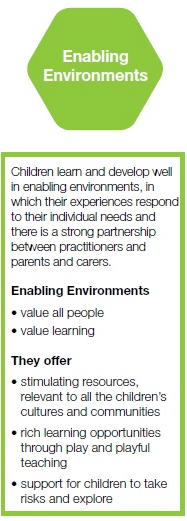 Enabling Environments theme should ‘value all people’ and all learning. Yet there is a division in the early years community about the role of technology in learning. Our young children have access to technology in the home and there are an abundance of reports and opinions claiming screen time is a contributing factor towards low attainment in physical, social and language development. For this reason, there are settings who switch off to technology provision.



 Cathy Hunt, of the
 Enabling Environments